
Which fragrance for which room
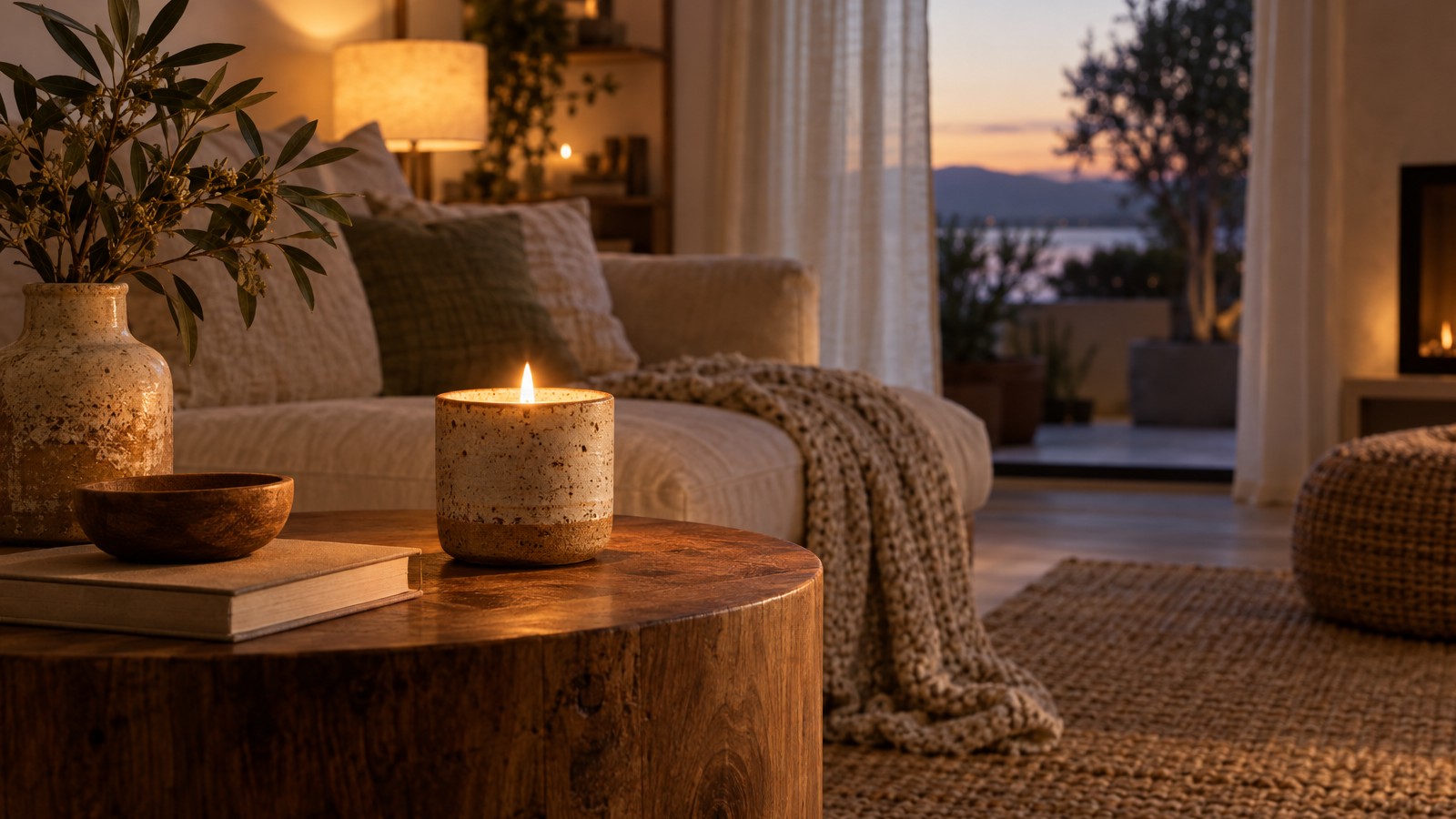
Enter a stranger's apartment with your eyes closed, and you know more about that household than you might think. The woody, warm wave in the hallway reveals someone who likes to curl up in an armchair. The citrus freshness near the kitchen speaks of a person who cooks and wants the air to be clean. The gentle lavender from the bedroom betrays evenings that have their own ending. Smell is the only sense that goes directly to the part of the brain where memories and emotions reside — without a stop, without translation. That's why the scent of a room hits you before you can judge the furniture or the wall color. And that's why choosing a candle's fragrance is not a decorative detail at the end of the list. It is the first sentence the room speaks. This guide shows how to write that sentence correctly — according to the four fragrance families and what each room is truly meant to do.

Four families, one alphabet of scents
The hundreds of scents on the market can be summarized into four families. They are not marketing boxes — they are four distinct ways a fragrance affects the body and mood. Once you understand them, you'll stop choosing based on a pretty name and start choosing based on what you want to feel in the room.
The Floral family is soft, calming, rounded. Lavender, jasmine, rose, peony. It reduces tension and evokes a sense of security — which is why it has been used since time immemorial where the body is meant to relax. The Fruity family is bright, juicy, energetic. Citrus, berries, apple, mango. It awakens, brightens, and gives the air a freshness that seems to wash the room. The Woody and Earthy family is deep, warm, grounding. Cedarwood, sandalwood, moss, gentle smoke. It slows the breath and gives the space a feeling of having walls and a ceiling to lean on. The Sweet family is embracing, cozy, almost edible. Vanilla, honey, caramel, tonka. This is the scent of comfort — it reminds you of a grandmother's kitchen and long, unhurried evenings. Four families, four moods. The rest of the guide is just about where to place each one. And most good candles don't rely on just one — they combine two, for example, a fruity top on a woody base. It is this blending that makes a fragrance interesting instead of flat.
Living room: warm wood and sweet vanilla
The living room is the room where you spend the longest time and with the least specific purpose. It doesn't need to be invigorated or cleaned — it needs to embrace. That's why woody and sweet families belong here: warm wood, sandalwood, vanilla, gentle caramel. These are scents that don't demand attention. They work in the background and do exactly what a good living room should do — they slow a person down the moment they sit down.
A woody scent has one practical advantage that a fruity one doesn't: it lasts through a long evening without becoming tiring. Citrus becomes boring after an hour, the brain stops registering it, and you add intensity you don't need. Wood and vanilla develop slowly, layer themselves, and won't disappear even after three hours of reading or conversation. In the cold months, this is the strongest choice in the entire apartment — a warm scent does the same for the mood as a blanket does for the body. For a large, open living room, reach for a more intense candle with a higher fragrance concentration; a gentle candle meant for a bedroom would get lost in such a space. A detail that cannot be rushed: let the candle burn for at least an hour. Woody and sweet notes need time to warm up to their full depth.
Bedroom: gentle floral notes and lavender
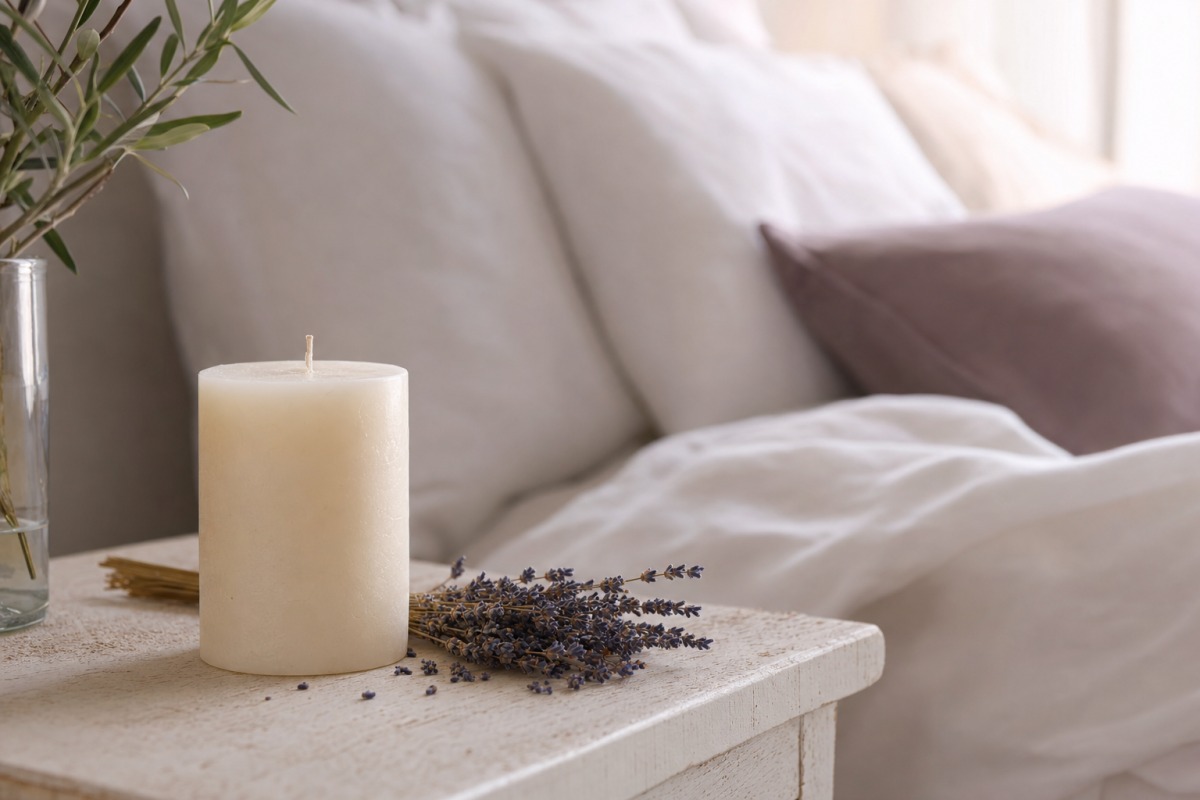
In the bedroom, only one rule applies, and it's the opposite of elsewhere: less is more. This is where the floral family belongs in its quietest form — lavender, chamomile, white tea, a hint of jasmine. These scents are not about you smelling them. They are about the body receiving the signal that the day is ending. Lavender is not a cliché without reason; it is among the few scents whose calming effect on the nervous system has been repeatedly described.
The most common mistake in the bedroom is intensity. A strong candle that worked beautifully in the living room does the exact opposite here — instead of calming, it keeps the brain alert. Choose gentler notes and light the candle half an hour before sleep, not when you're falling asleep; an open flame doesn't belong in sleep, so extinguish it before you lie down. It's enough for the scent to fill the space and settle into the fabrics. The soft floral trail in the pillow and curtains then works all night, long after the wick has gone out. In a small bedroom, a tiny candle will suffice; leave the large, prominent one for spaces where it has room to breathe.
Kitchen: citrus and fresh fruity scents
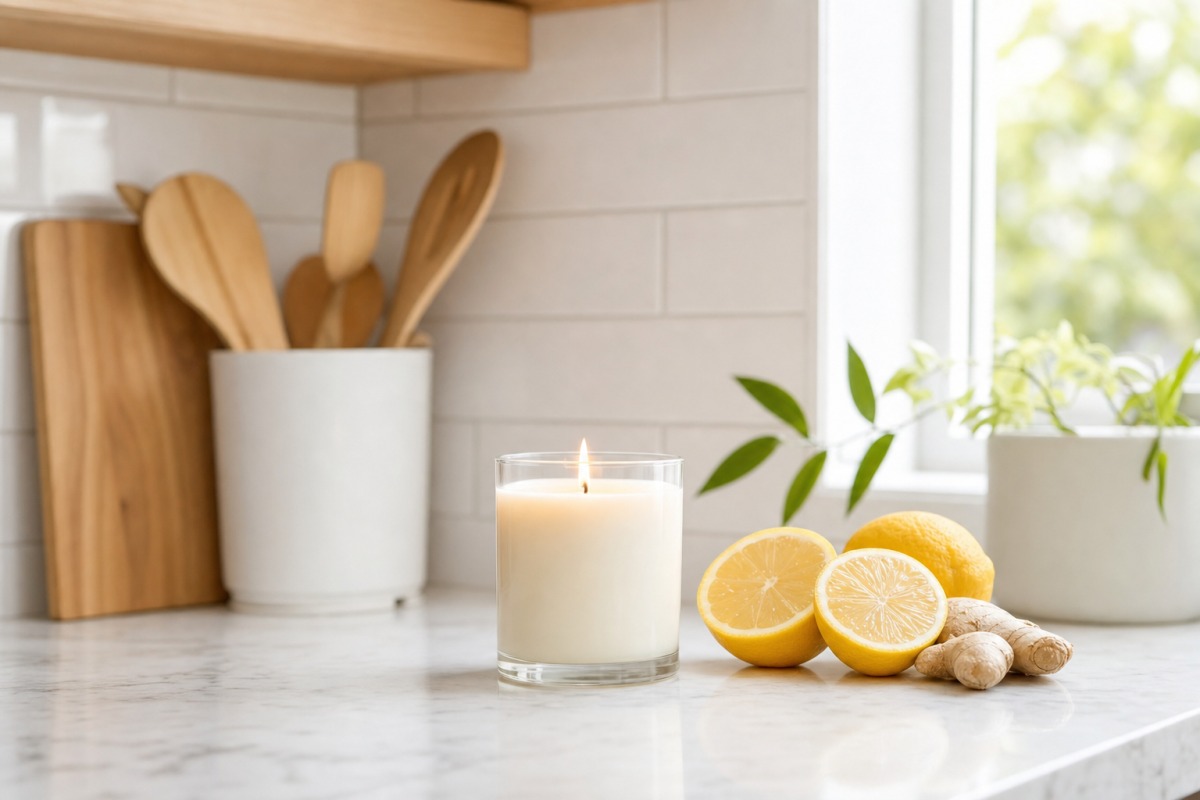
The kitchen is the only room where a scent has a specific additional job: to clean the air. After frying, after garlic, after fish, an odor remains in the air that clings to fabrics for hours. The fruity and citrus family doesn't overpower it with strength — it cuts through it with freshness and sweeps it away. Lemon, grapefruit, lime, green apple, ginger. These are scents that seem to rinse the air and leave behind an impression of cleanliness, not a battle of two odors. After cooking, light a fresh candle, and within ten minutes, the air changes from heavy to light.
The second reason is mood. Fruity notes are activating — they work where things are happening, where hands are busy and energy is needed. In the morning with coffee, a citrus candle can kick-start you just as reliably as an open window. Here, deliberately avoid sweet and woody families: in the kitchen, they would compete with the scent of food and mix into something heavy. Freshness against odor, energy against morning sluggishness — that's the whole equation of the kitchen.
Bathroom: clean freshness, eucalyptus, and sea breeze
The bathroom is small, and that changes everything. In a confined space, intensity multiplies — a strong candle that barely registered in the living room fills the air here and quickly becomes suffocating. That's why clean, airy, almost mineral scents belong here: eucalyptus, mint, sea salt, bamboo. Freshness that evokes a spa and open space, not a heavy perfume.
Eucalyptus has a bonus you'll especially appreciate in the morning: its cooling, almost menthol-like touch takes over the moist air and feels like it opens the breath. A few minutes in the bathroom with a eucalyptus candle is a small version of a steam treatment. Here, the rule of intensity applies even more strictly than elsewhere — rather a milder candle and shorter burning time. Because the bathroom is usually the smallest room in the apartment, a smaller candle here does more work than a large one. The goal is not to scent the room, but to give it a feeling of a clean, aired-out space. In the bathroom, moderation is the whole trick.
Home Office and Reading Nook: Wood that Focuses
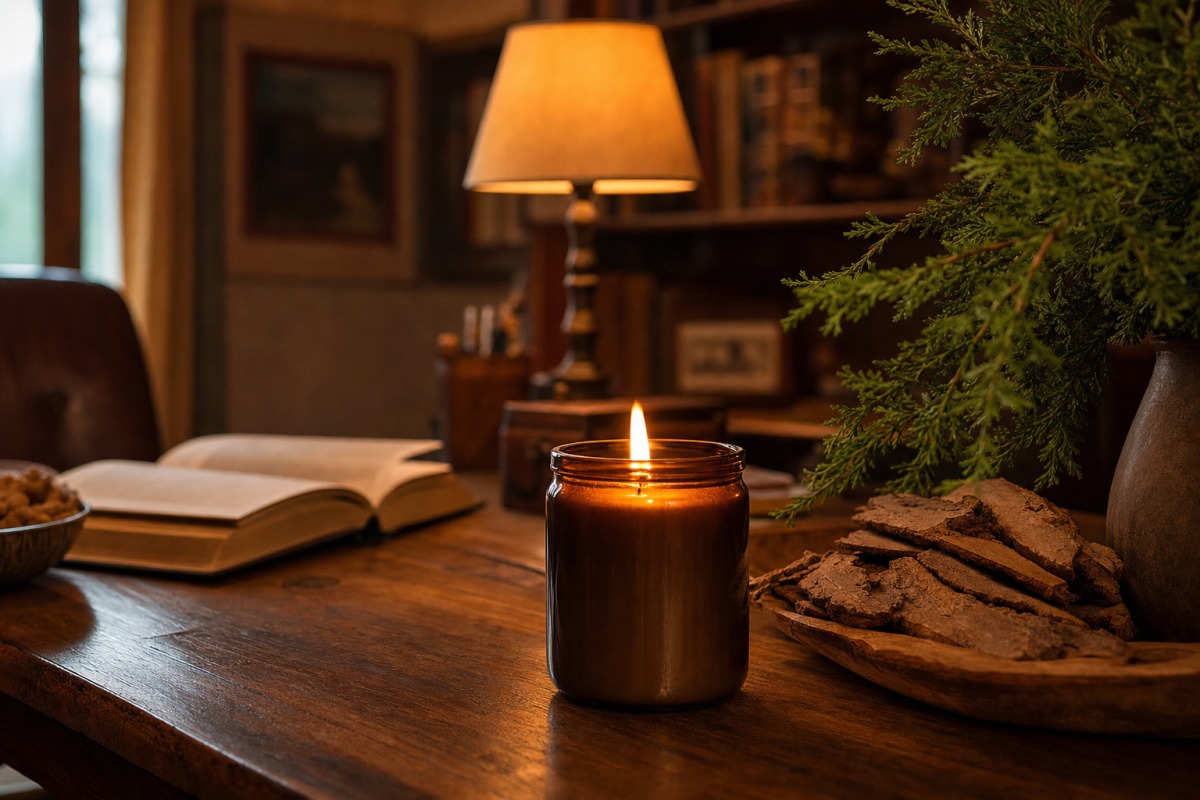
Where you concentrate — home office, reading nook, corner with a desk — scent works differently. It shouldn't put you to sleep or wake you up; it should keep you going. Woody and earthy tones in a moderate form: cedar wood, vetiver, soft sandalwood, a hint of tobacco or leather. These are grounding scents that give the mind a stable point and help it stay on one thing longer.
Woody tones have a special property — they aid concentration without being stimulating. Where citrus energizes and flowers soothe to the point of drowsiness, wood holds you in an alert but calm middle ground. Here, deliberately avoid sweet and strongly fruity families; a sweet scent pulls the mind towards comfort, citrus distracts with a short burst of energy that quickly fades. Wood holds a steady, quiet line for hours. Place the candle slightly to the side, out of direct line of sight — the scent should work in the background, not steal attention from the page or the screen. One candle, one woody scent, no mixing — that's the whole recipe for a space where you can work for three hours and not notice how they passed.
Three Rules That Matter More Than Choosing the Scent
Even the right family will disappoint if you get three practical things wrong. The first is intensity versus room size. Scent spreads into a space that has its own volume — a small bathroom needs a mild candle, a large living room with an open draft welcomes a stronger concentration. A candle with a high scent concentration will fill a standard living room in ten to fifteen minutes; in a small room, the same candle overwhelms after a few minutes. The rule is simple: the smaller the space, the milder the choice.
The second rule: don't mix too many scents at once. Two strong candles from different families in one room don't create a richer experience — they create confusion, which the brain evaluates as unpleasant and stops registering. Stick to one leading scent per room. If you want to layer, layer within the same family — wood with vanilla yes, wood with citrus and flowers at the same time no.
The third rule: seasonality. In summer, reach for lighter, fresher, and fruity notes — heat itself increases evaporation and a heavy woody scent can be too much. In winter, that same woody and sweet scent becomes what makes home cozy while it's dark outside at five o'clock. A scent note that warms in December suffocates in July. Change them according to the season as naturally as you change your bed linen.
Why the Wax Matters More Than It Seems
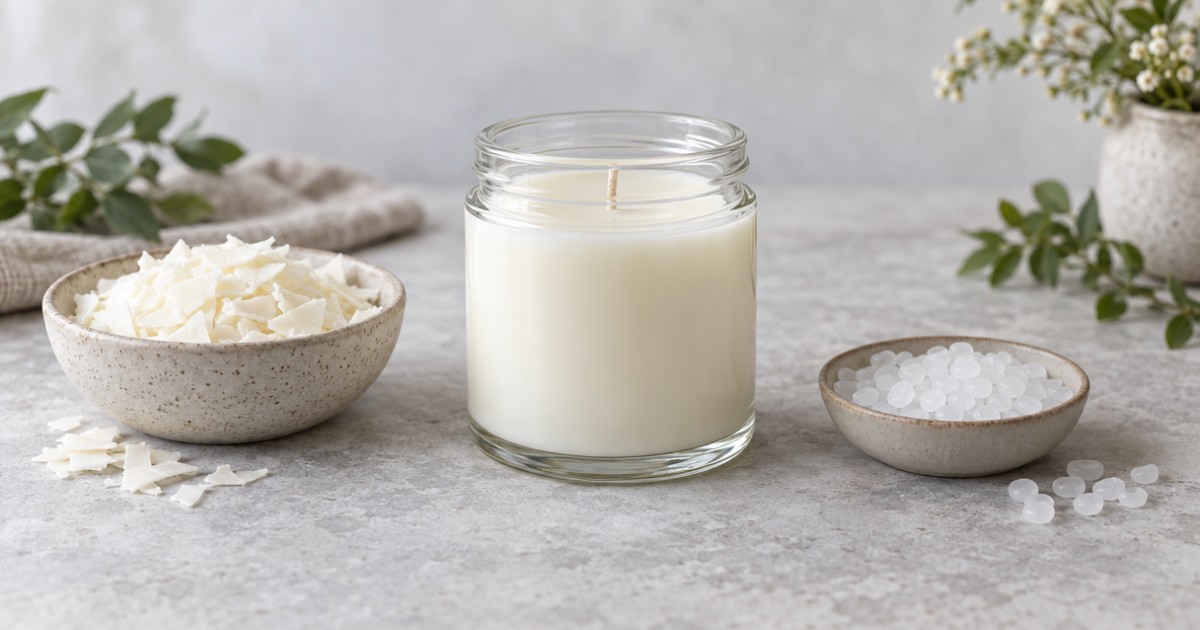
The scent family is half the equation. The other half is what carries that scent. This is where it's decided whether you get the scent it promises when lit, or a distorted echo of it. Cheap paraffin wax burns at a higher temperature, and that thermal harshness burns off part of the delicate aromatic molecules before they can reach the air. You know the result: a candle that smelled wonderful in the store, at home smells sweetly burnt, as if only a caricature of the original scent remains.
Natural vegetable wax burns at a lower temperature. It releases the scent more faithfully, gently, and evenly — the molecules evaporate gradually, layer by layer, from the first minute to the last. A delicate floral formula that would be lost on paraffin survives intact on vegetable wax. This is why it makes sense to ask not only what scent, but also what it burns on. The candles this guide is about are poured from premium EU vegetable waxes — by hand, in a small workshop in Slovakia. You can read more about who stands behind the production on the about the brand page. The difference between a scent on paraffin and on vegetable wax cannot be captured in a photo. You feel it in the first minute.

The right scent isn't about which one is the most beautiful — but about which one belongs in a given room and does what it's supposed to. Wood and vanilla for the living room and home office, delicate flowers for the bedroom, citrus for the kitchen, clean freshness for the bathroom. When you add a wax that carries the scent faithfully, the home gets its first sentence — the one you feel before the light comes on. Let everyone choose the family that fits their space and let it do its work. Hand-poured NOBAMO candles offer all four.

Founder and owner of e-shops, father of two daughters and husband of Majka. Enthusiast for quality items with a well-thought-out story — from jewelry and watches to fashion accessories. He runs his stores with the same care he devotes to his family: he selects brands and products that he would buy for his loved ones. He regularly writes about how to choose a piece that will last for years.
All articles by author
 Fruity

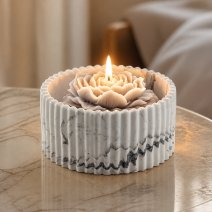
Carrara Candle - Peony / White / Silver / Lime, Mango
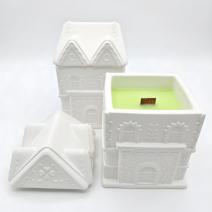

Medium House Candle - White / Apple, Cinnamon


Forever Candle - White / Coconut
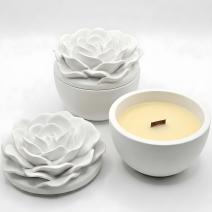
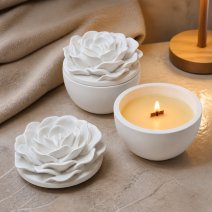
Candle Little Rose - White/Lime, Mango

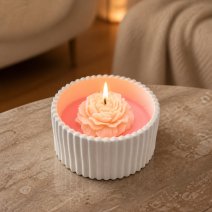
Satin Poppy Candle - White / Pink / Cherry, Almond
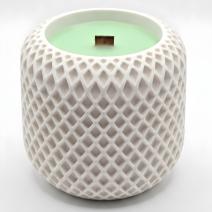
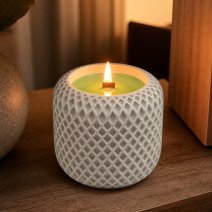
Candle Mosaic - White / Neon Green / Apple, Cinnamon

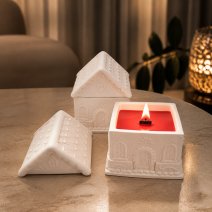
House Candle - White / Strawberry, Rhubarb


Vintage Van Candle - White / Lime, Basil, Mandarin

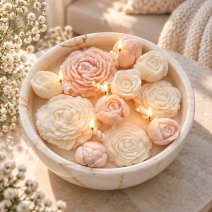
Candle Blooming Marble - White / Gold / Lime, Basil, Mandarin







Comments
Add comment
Login required
To add a comment, you must log in to your account.
Don't have an account? Register