
Candle wick trimming — the 3-5 mm rule, longer burning, less soot

A burnt candle after four hours of burning. A 12 mm long wick with a black mushroom at the tip — an accumulated charred cotton residue that no longer burns, only smokes. The flame jumps erratically, the wax around the wick melts unevenly, leaving a solid rim on the opposite side of the container. This is not a candle defect. It is the result of one thing that nineteen out of twenty buyers never do: they do not trim the wick to 3 to 5 mm before lighting. This step significantly extends the total burn time of the candle and restores the flame to a clean, yellow shape with a golden edge. Here is the rule, the mechanics behind it, a five-step trimming technique, and comparison tables for five wick types.
The 3 to 5 mm rule and the 2:1 ratio to wick diameter
A cotton wick type ECO-4 or ECO-6 has a dry diameter of approximately 1.5 mm. After absorbing wax, it grows to 2.5 mm. The optimal working wick length for this diameter is 3 to 5 mm, a ratio of approximately 2:1 between the length and diameter of the impregnated part. At this length, the capillary transport of wax to the flame remains balanced with the burn rate. The flame is 8 to 10 mm high, yellow with a golden edge, without a smoke trail.
The ratio rule has a physical basis. The wick absorbs liquid wax through capillary action; the amount of wax reaching the flame per second depends on the length of the active combustion zone. A wick that is too long absorbs more wax than the flame can decompose at its temperature: the excess begins to smoke and form carbon residue. A wick that is too short (under 2 mm) will stop absorbing enough wax, and the flame will suffocate or enter a smoldering phase without proper burning.
The National Candle Association, in its candle care guidelines, recommends trimming the wick to about 6 mm (1/4 inch) before each lighting. Many European workshops working with cotton wicks lower the recommendation to 3 to 5 mm, because European wax formulations often have a lower proportion of hard paraffin fractions, and the wick needs a slightly shorter active zone for the same performance. Therefore, take 3-5 mm as a practical recommendation for smaller candles and softer waxes, not as the only correct rule.
The difference is noticeable in practice. A taller, unstable flame from a long wick burns more wax per hour than a lower, steady flame from a properly trimmed wick. This directly translates to wax consumption and total burn time — a shorter wick simply means the candle lasts longer.
Five wick types and how they respond to trimming
The wick market is not a single category. The difference between types has a practical impact because the 3 to 5 mm rule does not apply uniformly. A wooden wick works completely differently from a cotton one; a paraffin-impregnated wick has a higher tendency for carbon residue. Here is a comparison of five types most commonly found in hand-poured candles in Slovak workshops.
| Wick Type | Diameter (dry) | Optimal length after trim | Tendency to mushroom | Trimming frequency |
|---|---|---|---|---|
| Cotton ECO-4 | 1.4 mm | 3-4 mm | low | before each lighting |
| Cotton square-braid | 2.2 mm | 4-5 mm | medium | before each lighting |
| Paraffin-impregnated | 1.6 mm | 3-4 mm | high | before lighting + mid-trim after 2 h |
| Wooden flat (cherry / cedar) | 10 × 0.8 mm | 5-6 mm | none | only when relighting |
| Lead-free cotton | 1.5 mm | 3-5 mm | low | before each lighting |
Cotton ECO-4 is the most common in 200-gram container candles. Thanks to its narrow diameter and pure cotton composition, it creates minimal mushrooming at the wick tip. Square-braid is wider, suitable for 300 to 500 g candles with a flame diameter over 10 mm, where the tendency for carbon residue is higher and shorter trimming intervals are needed.
The paraffin-impregnated wick has one disadvantage that manufacturers mention less often. The paraffin in the wick burns along with the wax and leaves carbon residue. After two to three hours of burning, a mushroom forms faster than with pure cotton. For this type, a shorter trimming interval is recommended, ideally even in the middle of a longer burn session: extinguish after two hours, trim the wick, and relight.




Mushrooming at the wick tip and why it occurs
Mushrooming, or a mushroom at the wick tip, is a compact accumulation of black carbon at the top of the wick. It forms during burning when the wick is longer than 5 mm: part of the wick absorbs wax, but the flame does not have time to fully decompose it, undergoing incomplete pyrolysis. At temperatures below 800 °C (the inner yellow zone of the flame above the wick is 600 to 1,000 °C, the hottest outer blue zone at the edges reaches 1,200 to 1,400 °C, so the area directly above the wick is paradoxically the coolest), the cellulose does not break down into CO₂ and water but remains as a solid carbon skeletal residue.
This residue accumulates and forms a compact cap-like formation that disrupts the wax supply. The wick stops functioning as a capillary and starts acting like a candle sacrificial wick: it smolders, smokes, and the flame jumps. The mushroom is visibly black, slightly shiny, and after a few hours of burning, it grows to a diameter of 3 to 5 mm, wider than the wick itself. In a candle in a glass container, it leaves a black stain on the inside of the glass, which is difficult to clean later.
The flame on an untrimmed wick reaches 12 to 15 mm and often has two or three peaks. This means that part of the wax does not burn at the optimal temperature, producing solid carbon aerosol (soot). At the optimal wick length of 3 to 5 mm, the flame has a uniform cone of 8 to 10 mm with an outer zone above 1,200 °C: the wax decomposes completely, and soot remains below the threshold of visibility.
The size of the mushroom on the wick is not just a cosmetic issue; it is also a signal of combustion quality. An untrimmed wick with a large mushroom burns less cleanly and produces visibly more soot and fine particles than a regularly trimmed wick. If you regularly light candles in smaller, poorly ventilated spaces, this is another practical reason to check the wick length before each lighting.
Burn time for a 200 g candle with different care
A numerical look at the difference between a regularly trimmed and an untrimmed wick. A 200 g candle in a glass container with a diameter of 70 mm and a height of 80 mm, soy-coconut wax with 8% fragrance, wick ECO-4. Four scenarios, each starting with 200 g of wax and running until complete consumption or until the wick lost its ability to burn.
| Care Scenario | Average Wick Length | Flame Quality | Relative Burn Time |
|---|---|---|---|
| No trimming (baseline) | 14-18 mm | high, unstable, smoky | shortest |
| Trimming only 1× at the start | 9-15 mm (growing) | good initially, gradually worsens | longer |
| Trimming before each lighting | 3-5 mm | stable, yellow with a golden edge | significantly longer |
| Trimming before + during (after 2 h) | 3-4 mm | cleanest, minimum soot | longest |
The most realistic use for a home customer is the third scenario (trimming before each lighting) — with little effort, you get a noticeably longer and cleaner burn time. The fourth scenario (mid-trimming roughly after two hours) is premium care, which extends the burn time even more significantly, but requires you to let the candle go out for a moment in the middle of a longer evening. This is how workshops care for candles, where the master tests the candle before shipping and regularly trims the wick during a long control burn.
For paraffin candles from the standard range, the difference is even more pronounced, as paraffin has a higher tendency to create carbon residue. Soy and coconut waxes are less prone to mushrooming, so the absolute difference in hours is usually smaller, but the relative waste remains similar. Practically, this means one thing: the more expensive the candle and the longer you plan to burn it, the more regular wick trimming pays off — by not trimming, you are shortening the very lifespan you paid for.







Burn rate with a mushroom: accelerated wax consumption
A candle with a long wick and a visible mushroom burns noticeably more wax per hour than a candle with a wick regularly trimmed to 3-5 mm. A larger and unstable flame simply "eats" fuel faster — and it is precisely this difference that shortens the total burn time.
The cause is that a larger and unstable flame not only melts the wax directly under the wick faster, but also radiates more heat to the surroundings. The wax within a radius of 4 to 5 cm from the wick stays in liquid form longer, which increases the evaporation rate of fractions with a lower boiling point. The candle thus does not burn cleaner or longer: it consumes more wax for the same visual effect and, moreover, leaves more soot on the container and surroundings.
90° cut and why regular scissors are not enough
Wick trimmers are about 15 cm long and have an angled geometry: the blades are offset from the handle so that the hand is outside the container during cutting and the trimmed wick falls into a flat metal tray integrated into the tool. Their cutting blade is set at 90° to the wick axis. The cut is straight and perpendicular. The cut piece falls into the tray, not into the wax, where it could reignite as a secondary wick upon the next lighting.
Regular scissors make an angled cut. An angled cut leaves a sharp tip on the wick, which burns faster than the rest of the wick upon lighting, the flame is asymmetrical, the wax melts unevenly, and a wax pool forms only on one side of the container. For candles in wider containers (diameter over 8 cm), the asymmetrical wax pool never evens out, and the candle eventually tunnels: the wax at the edges remains untouched, and the candle ends with 100 to 150 grams of unburned wax.
Wick trimmers in the price range of 5 to 15 euros are available in wood or brass with a matte finish. Premium variants from 20 to 35 euros have polished brass, a wooden handle made of oak or walnut, and an integrated hook for pulling remnants out of the wax. For a regular household, the mid-range category is perfectly sufficient; the cutting geometry is the same, only the material and design differ.
An alternative if you don't want to buy a specialized tool: standard nail clippers with a straight blade (NOT curved manicure ones), clean, held at a 90° angle to the wick axis. This works for most candles. For containers with a narrow neck (diameter under 5 cm), wick trimmers are practically irreplaceable due to their angled geometry, as regular scissors cannot reach into the neck without the risk of touching the wax rim.
When to trim: before lighting or after extinguishing
The simplest rule: always trim before lighting, when the candle is cold and the wax is solid. In this state, the wick is stiff, the mushroom can be easily broken off with fingers, and the scissor blades do not lose their geometry on a moving surface. The cut is clean and precise. This pattern covers eight out of ten candle sessions.
Alternative: trim shortly after extinguishing, when the wick is warm, but the flame has been out for at least 5 minutes. In this phase, the upper black part of the wick (the charred residue) is soft and can be crumbled off with fingers without scissors. If you want the wick to be definitively at 4 mm before the next lighting, use scissors even in this phase.
Never trim while burning. Hot wax and a burning wick are a dangerous combination: the metal of the scissors conducts heat, drops of liquid wax can splatter, and the burning wick can fall into the wax when cut, potentially igniting the edge of the container. Some foreign guides recommend trimming during burning using a so-called wick dipper (a tool for dipping the wick into the wax to extinguish it instantly). For home use, this unnecessarily complicates the process. Extinguish, wait, trim.
Five-step technique from extinguishing to relighting
A procedure that becomes automatic after three or four repetitions:
- Extinguish the flame and wait approximately 10 minutes. The wax around the wick solidifies, the wick cools down, and the mushroom at the tip becomes firm and brittle. The candle should be on a level surface in a stable position.
- Snap off the mushroom with your fingers or wick trimmers. With a dry wick, the black residue breaks off with a single click between your thumb and index finger. If the wick is soft or warm, use the metal tip of the hook integrated into the trimmers.
- Make a 90° cut to a length of 3 to 5 mm from the wax surface. Hold the trimmers perpendicular to the wick axis, with the cutting blade pointing down into the tool's tray. The cut piece falls into the tray, not into the wax.
- Remove any broken wick pieces from the wax. Even a small cotton fragment under 2 mm can catch a flame as a secondary wick upon relighting, causing the container's edge to melt asymmetrically and creating a wax puddle on one side.
- Light it. The flame should be immediately stable, 8 to 10 mm high, yellow with a golden edge, and smokeless. If the flame flickers or smokes for the first 30 seconds, the wick is likely too short. Next time you trim, leave 5 mm instead of 3.
The entire technique takes less than a minute if the candle is cold and the wick is dry. For paraffin candles from the mainstream range, we recommend repeating this before every lighting. For premium coconut or soy waxes with a lower tendency to mushroom, trimming every second or third lighting is sufficient, as the wick does not wear out as quickly.
Decision matrix: which candle, which wick, what frequency
A decision table for the most common candle types. Just check the weight and wick type, and the action step follows directly from the row.
| Candle type | Wick type | Optimal length | Trimming frequency |
|---|---|---|---|
| Container candle 100-200 g | ECO-4 / lead-free cotton | 3-4 mm | before each lighting |
| Container candle 300-500 g | square-braid cotton | 4-5 mm | before lighting + after 2 h during longer burns |
| Container candle 500-1000 g (multi-wick) | 2-3× ECO-4 parallel | 3-4 mm each | before lighting + intermediate trim for each wick |
| Candle with paraffin-impregnated wick | paraffin | 3 mm | before lighting + every 2-3 h |
| Freestanding candle (pillar) | square-braid thicker | 4-5 mm | before lighting |
| Candle with wooden wick | cherry / cedar flat | 5-6 mm | only upon relighting (after breaking off the carbon) |
| Tea light | mini ECO-1 | 2-3 mm | wick is fixed in the aluminum container, trimming is not possible |
Tea lights have their own category because their wick is firmly fixed into the aluminum container and cannot be trimmed from the side. The optimum here lies more in correctly placing the candle in the holder so the flame has free access to air.
Wooden wick: a different trimming process
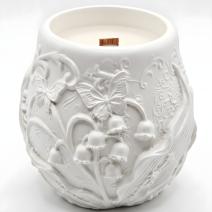
A wooden wick is a flat wooden lamella instead of a cotton cord. It burns differently: with a characteristic crackling reminiscent of a fireplace, the flame is long and flat (15 to 20 mm wide at 8 to 10 mm high). The optimal working length for a wooden wick is precisely 5 to 6 mm. More is not recommended because wood has higher thermal conductivity than cotton, and a longer wick quickly chars into a dead zone.
Trimming a wooden wick is done with your fingers or a special wood wick trimmer with a straight blade (NOT a curved one). Cotton wick trimmers have a curved geometry that makes an imprecise cut on wood. The charred top edge breaks off with a single finger motion when the candle is cold; the wood underneath is firm and forms a natural break. We are preparing a separate article within the candle series covering wooden wicks, their crackling acoustics, and maintenance in more detail.
Conclusion: when the 3-5 mm rule is most beneficial
Wick trimming provides the greatest benefit for larger candles in glass containers — say, with a diameter over 6 cm and a weight over 150 grams. For small candles (tea lights, small soy candles), the difference in burn time is minimal, and buying a specialized tool is often not worth it. However, for more expensive candles with a declared burn time of tens of hours, trimming is practically a prerequisite to achieving the value the manufacturer promises: without it, you lose a noticeable portion of the candle's lifespan.
For those who have a candle as a daily part of their living room or bedroom, the investment in wick trimmers pays off after just a few candles. The 3 to 5 mm rule becomes an automatic motion before lighting after a week of use — short, firm, and repeatable. The reward is a steady 8 to 10 mm flame with a golden edge and smooth glass container walls without black soot — and a candle that lasts noticeably longer than if you never trimmed the wick.

Mother of two daughters, wife of Roman and the heart of our creative studio. Besides writing blogs, she dedicates herself daily to the handmade production of candles and decorative containers — she knows the materials, knows what lasts and what simply delights the home. She looks at jewelry, watches and fashion accessories from real family practice: what serves, what endures and what truly brings joy.
All articles by author
 Tealight Holders

Design Candle Holder Cat – White
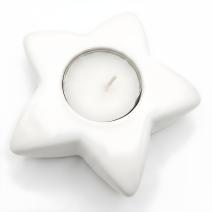
Designer Star Candle Holder - White
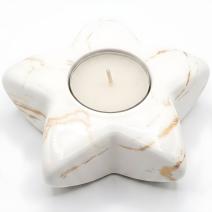
Design Candle Holder Star - White / Gold
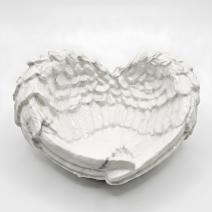
Designer candle holder and tray Wings - White / Silver
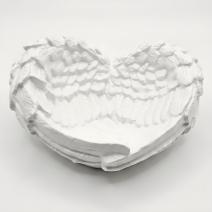
Designer candle holder and tray Wings - White
Multifunctional Bunny Night Light - Brown






Comments
Add comment
Login required
To add a comment, you must log in to your account.
Don't have an account? Register