
1% paraffin in a soy candle — a legal loophole

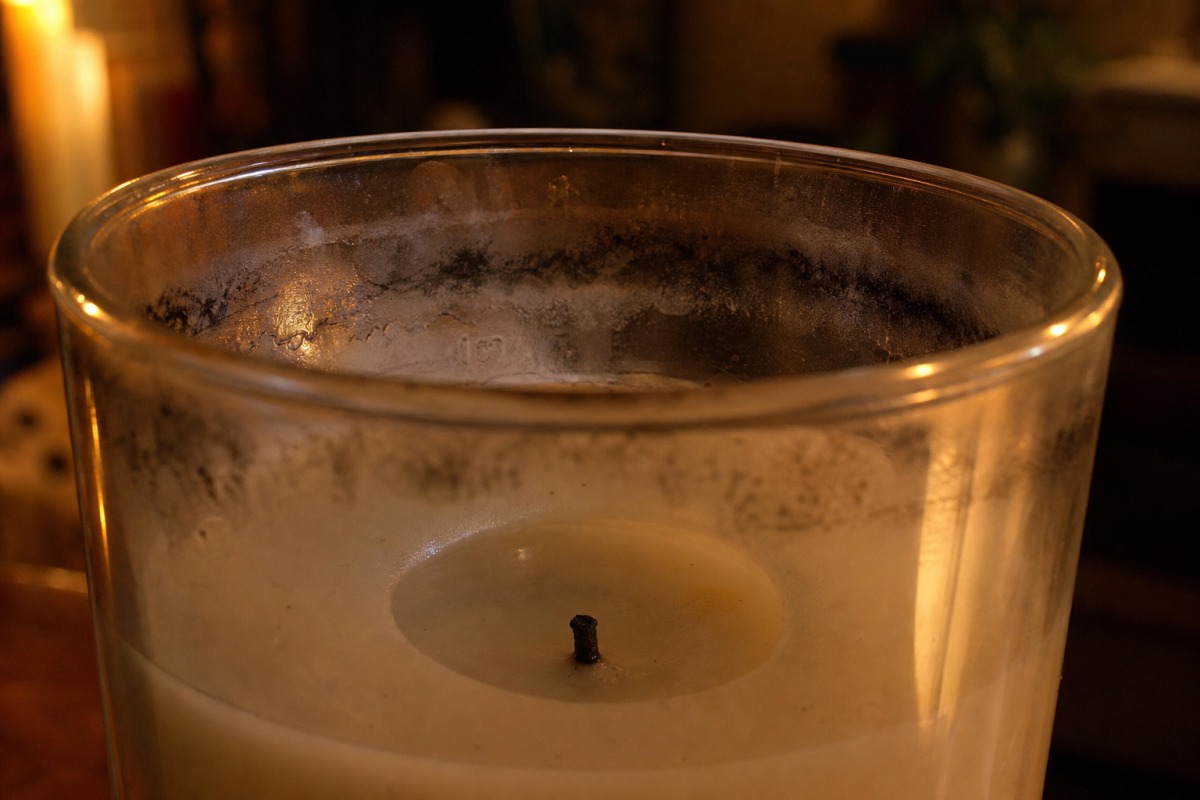
Eva wrote to me in March. A short email, four lines, no details, but the tone between the lines was palpable. She bought a candle from a chain store labeled "soy wax" for nine euros, brought it home, lit it in the evening while bathing the children, and after two hours of burning, she saw black streaks on the inside of the glass jar that couldn't be wiped off. She wrote to the manufacturer through the contact form, asking politely and in detail what percentage of soy wax the candle actually contained. The reply came three days later: "The composition is a trade secret. We are certified according to European legislation. Thank you for your interest in our brand." Eva asked if this was normal, if she should write to someone, if she should throw the candle away, if it was like this in every chain store. Questions I couldn't answer quickly that evening. This article is the long answer I owed her.
The question they don't answer
I'll start with an admission that sounds strange coming from someone who also pours candles. European legislation does not force candle manufacturers to be transparent about their composition. It's not a loophole in the law; it's a conscious choice in how consumer household products are regulated in the Union: regulation of chemical safety yes, regulation of the accuracy of marketing claims almost none. The candle falls precisely into this gray zone between "it is safe to use" and "the manufacturer can say whatever they want about it, as long as they don't lie outright."
I took a free Monday evening and wrote to seven candle manufacturers sold under the "soy candle" label in various Slovak, Czech, and Polish chain stores. I sent messages to four via contact form, and to three via email. The question was one: "What percentage of soy wax does your candle contain?"
The answers surprised me less than you might think. Two manufacturers didn't reply at all. Three replied in the style of Eva's response: "it's a trade secret, we are certified." One answered honestly that the candle contains "at least three percent soy wax" in combination with paraffin and stearin. One answered in detail (eighty-five percent soy, the rest stearin from palm oil, no paraffin), and this manufacturer was the most expensive of the entire group (eleven euros for a three-hundred-gram candle in glass).
The ratio of openness to price was not surprising. The most expensive manufacturer openly stated the number. The cheapest didn't reply at all. The middle tier answered evasively. The trend is consistent with other consumer categories: the lower the price, the greater the likelihood that transparency is replaced by a marketing claim without substantiated content.
What European regulation says about candles
The European regulatory framework for candles consists of four main documents. None of them imposes an obligation to state the exact percentage composition of the wax mixture on the packaging.
The first is Regulation CLP 1272/2008 on the classification of chemical mixtures. It focuses on chemical mixtures with demonstrable health or environmental risks. Candles as a consumer product are covered vaguely. Fragrance oils may fall under IFRA and EU 2023/1545 regarding the content of allergenic ingredients above the 0.01% limit. The wax itself is not subject to CLP classification in terms of the need to disclose the ratio of paraffin, soy, coconut, or rapeseed.
The second is Directive 2001/95/EC on general product safety. It requires products to be safe under normal use, but does not specify an obligation to state the ratio of wax components.
The third is the family of ASTM standards for the candle segment, particularly ASTM F2417 (Standard Specification for Fire Safety for Candles). It regulates safety parameters of burning and warning labeling, not composition. It is voluntary in the USA and non-mandatory in the EU.
The fourth is the Unfair Commercial Practices Directive 2005/29/EC, which covers misleading advertising if it can be proven that the average consumer has been misled. A "soy candle" with four percent soy would be difficult to prove as "misleading" in court, because the presence of even one percent of soy wax in a hybrid mixture formally defends the statement.
The verdict: a candle labeled "soy" can contain any ratio of vegetable and paraffin wax. If the final composition does not pose a demonstrable health risk, the marketing claim "soy" remains legally usable even with 5 or 10 percent soy content. The rest can be paraffin.
Three case studies from three chain stores
Three real stories from Slovakia over the last six months. I have changed the names, I am not identifying the candles by brand. The goal is to show a recurring pattern.
Case one: Eva, Bratislava, March. Eva bought a three-hundred-gram candle in glass for nine euros fifty at a drugstore in the city center. The label stated "vegetable wax." Price per hundred grams 3.15 €. After two hours of burning, dark streaks appeared on the inner glass in the upper third. The residue was fine, black, greasy, smelling of burnt matter. The physical characteristic of soot (carbon black), a product of incomplete combustion of hydrocarbons, which does not usually appear to this extent with 100% vegetable wax. It is not proof of the presence of paraffin, but a strong indicator.
Case two: Lucia, Žilina, February. Lucia bought a two-hundred-gram candle for 5.40 € in a home improvement chain. The label stated "soy wax with natural essential oils." The candle smelled intense for the first hour, the scent rapidly weakened in the second hour, and was barely noticeable in the third. This hot-throw profile is exactly what would be expected from a hybrid with a higher proportion of paraffin. Paraffin has lower viscosity at the same temperature and releases fragrance molecules more quickly all at once.
Case three: Andrea, Prešov, January. Andrea bought a 600-gram three-wick candle for €11.50 at a hypermarket. The label stated "natural soya wax candle." The candle burned for over thirty hours in total. After the twentieth hour, the wax darkened to a beige-gray shade. Soy wax usually remains creamy-white when burned repeatedly. A color change is more typical of hybrids with paraffin, as paraffin darkens upon repeated overheating (oxidation of hydrocarbons).
Three different chains, three different signals. None alone is proof of paraffin presence, but together they paint a picture that repeats with a frequency that is not random. And manufacturers are not required to declare the composition.
Why a small proportion of paraffin changes candle behavior
Even 1% paraffin added to a soy base changes the physical behavior of the entire candle. This effect is well documented in the professional literature on waxes and combustion.
The first measurable difference: melting point and melt range width. Pure soy wax has a melting point in the range of 49 to 55 °C. Paraffin used in candles has a range of 46 to 68 °C depending on the type (container vs. pillar). Adding 1% paraffin does not dramatically lower the melting point (typically by 0.5 to 1 °C due to eutectic depression), but it widens the melt range, so the melt forms at lower temperatures and a liquid zone (melt pool) forms more quickly around the wick. Details in ScienceDirect Combustion and Flame (2023).
The second difference: melt viscosity. Paraffin has a lower viscosity than soy at the same temperature, which facilitates the transport of dissolved fragrance oil through the capillary action of the wick. In a 99% soy environment, the fragrance oil is released slowly and gradually, leading to a weaker cold throw but a longer and more balanced hot throw throughout the burn. With a 99/1 or 95/5 hybrid, the hot throw visibly accelerates in the first hour, which the consumer interprets as a "strong scent" with a rapid decline in subsequent hours, once the top notes of the perfume have already escaped.
The third difference: soot emissions. Paraffin produces a higher proportion of incompletely burned carbon particles (carbon black, soot) during combustion than vegetable waxes. The professional literature on wax combustion (Beyond Aromatherapy, 2023, in ACS Environmental Science and Technology) highlights candle particulate emissions as an underestimated factor in indoor air quality. The NFPA report cites over 7,000 home fires caused by candles annually in the USA. The result of adding 5% paraffin is visible to the eye: grayish to black marks on the inside wall of a glass container after 2 to 3 hours of burning.
The fourth difference: visible smoke during burning. A 99% soy candle produces almost invisible smoke with proper wick sizing. A 95/5 hybrid starts producing visible smoke more frequently during longer burns and in smaller spaces. This smoke is not acutely toxic under normal use (Petry et al. 2014), but long-term exposure in poorly ventilated spaces shows a measurable difference between pure soy and the hybrid.
The economics of the hybrid: why manufacturers do it
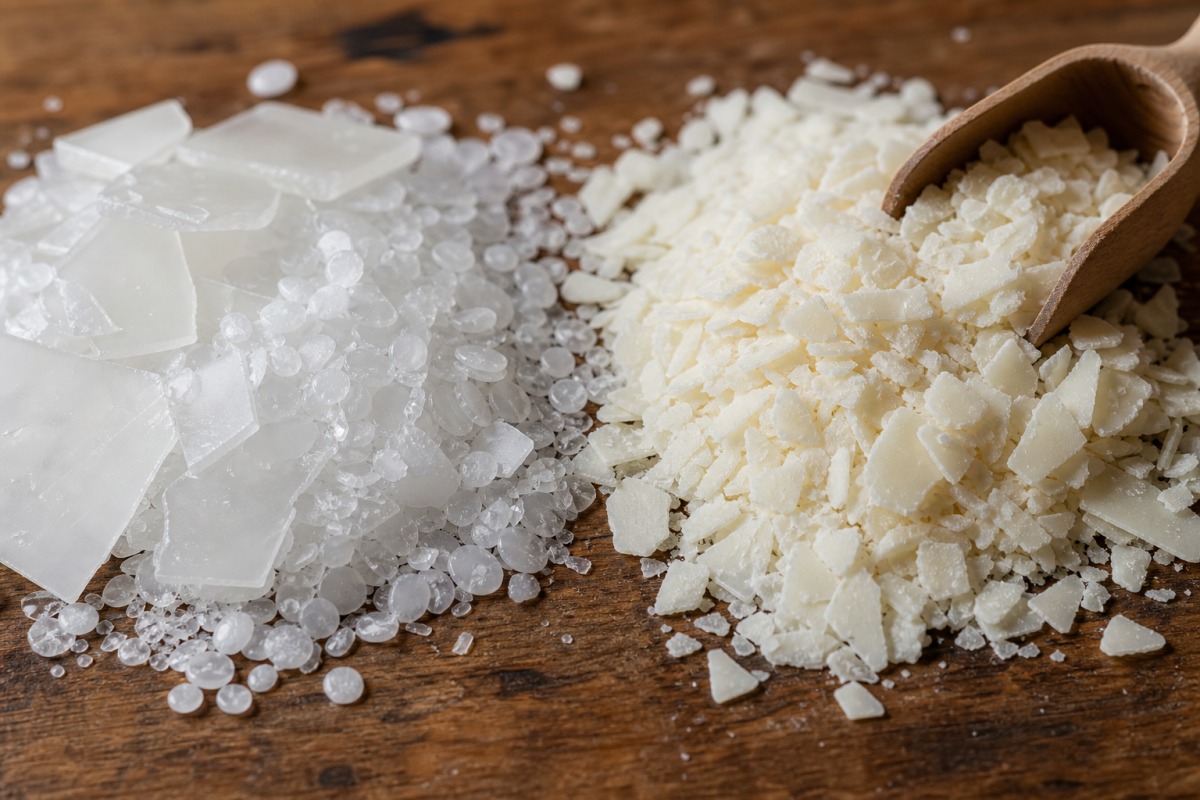
The price difference between a paraffin base and pure soy is significant. The raw material cost of paraffin wax used for candles ranges from €1.20 to €1.80 per 100 grams. The cost of pure soy wax (comparably high quality, certified for candles) ranges from €4 to €6 for the same amount. This is a 2 to 5 times difference in raw material costs.
Adding 5% paraffin to a soy base significantly reduces the manufacturer's cost price. If the product is marketed as a "soy candle" in the €8 to €12 price category, the margin on the hybrid is significantly higher than on pure 100% soy. The consumer pays a premium price for a commodity hybrid.
This positioning is not illegal, but it is a transparency problem that the consumer cannot verify without insider knowledge. The label says "soy candle," the consumer assumes 90%+ soy content, the manufacturer supplies a 95/5 or even 80/20 hybrid. No party has broken the law. However, the consumer did not get the product they thought they were buying.
The economic logic also extends to the choice of wick, additives, and fragrance oils. A cheap hybrid is often accompanied by a cored wick, which keeps the wick upright even in the hybrid melt but produces more soot. A cheap hybrid often contains synthetic fragrance oils with a higher proportion of volatile compounds. Combined with a paraffin base and the marketing claim "soy," they form a product that is different from what the consumer imagined.



Detective clues: five tests in the store
Here are the tools I use when I want to quickly assess whether the candle I'm holding is truly vegetable-based or a hybrid. None of them is perfect on its own, but together they form a net that catches most suspicious candles before they pass the checkout.
Accuracy of the wording on the label. This is the strongest clue. A formulation like "100% soy wax" or "100% vegetable wax with specification (soy 70%, coconut 20%, rapeseed 10%)" is a precise and verifiable declaration. The manufacturer commits to a number. A formulation like "soy wax" or "vegetable wax" without a percentage only says that soy wax is present in the candle. Five percent is enough, one hundred percent is enough. A formulation like "wax blend," "wax base," "contains vegetable wax," or "candle wax" is a red flag. The manufacturer chooses these formulations precisely to avoid declaring anything specific.
Price per hundred grams. A candle in glass under five euros per hundred grams is economically very unlikely to be 100% vegetable-based. A candle over eight euros per hundred grams could be 100% vegetable-based, but you still need to verify it on the label. The rule is not absolute, but the tendency is strong enough for price to be the second strongest indicator after the label.
Cold throw in the store. Open the candle, bring your nose 2 to 3 cm above the wax surface, and inhale briefly. If the scent "hits" strongly, it is an indicator that the fragrance profile is boosted with synthetic fragrance oils and/or that the wax releases the scent faster (paraffin). For a 100% soy candle, a mild, gradual cold throw is typical.
Look at the wick. The wick should be pure cotton, soft, white or neutrally colored. If you see a wire in the center (zinc, lead-free alloy, tin), the wick needs a metal reinforcement in the liquid phase. Cored wicks are often used in paraffin or hybrid candles. A quick test: gently pull the wick with your fingers; if it is stiff and holds its shape on its own, it is a wick with a metal core.
Burn test at home. Light the candle in a well-ventilated room, let it burn for 2 to 3 hours, and observe three things. Glass: vegetable wax with a properly sized wick leaves the glass clean or with a slight milky film, a hybrid leaves a darker trace. Flame: vegetable wax burns calmly and steadily, a hybrid often flickers. Scent after extinguishing: vegetable wax briefly smells as it did while burning and gradually fades, a hybrid often leaves a "burnt" trace.
Consistency of five brands on one shelf
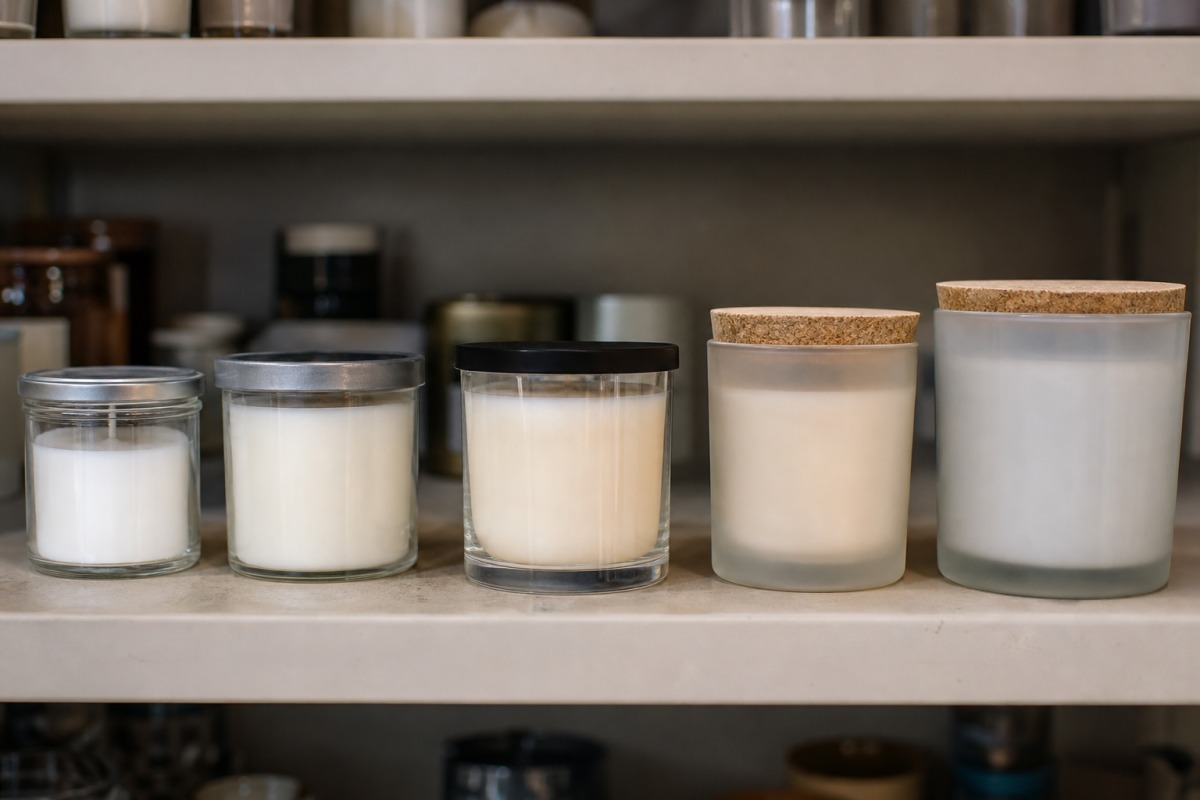
I did a small survey of five brands that are typically placed on one shelf in a drugstore or in the home section of hypermarkets. I will not name the brands. The shelf tends to be divided into four price levels.
The lowest level (€1.15 to €2.50 for a small candle) contains candles without any claim about the wax composition. The packaging talks about the scent ("vanilla", "lavender"), but does not use the word "soy" or "vegetable". These are ordinary paraffin candles, honestly not wrapped in marketing; in this category, the consumer can buy without illusions.
The second level (€3 to €5 for a medium candle) contains candles with a vague statement like "vegetable wax", "natural wax", or "eco wax". This is exactly the category that caught Eva. The price is significantly higher than the lowest level, but still well below the price of a fully vegetable-based candle. The statement on the packaging is imprecise. The customer pays for marketing transparency that is actually lacking.
The third level (€6 to €9 for a medium candle) contains candles with a more specific statement ("soy wax", "soya wax"). These candles often tell the truth that soy wax is in them, but they usually do not say how much. In this category, the ratio of good and bad players is roughly fifty-fifty. Half of the manufacturers truly have 80 to 95% soy wax. The other half uses soy wax as a minority component in a hybrid. Without a burn test or directly asking the manufacturer, you cannot tell the difference.
The fourth level (€11 to €20 and more for a medium candle) contains candles with an explicit declaration ("100% soy wax", "coconut mix"), with certifications, with information about the author or manufacturer. This is the level where transparency usually truly works. The price reflects the raw material, labor, and quality control.
Greenwashing in the candle segment
Marketing language in the candle segment ranges across a wide spectrum, from precise declarations of composition to vague suggestive words without regulatory weight. The consumer should be able to distinguish which words on the packaging actually mean something.
Words like "eco-friendly", "natural", "eco-soya", "green", or "pure" have no fixed definition within EU regulations for the candle segment. Any manufacturer can use these words without needing to prove a specific property. A candle with 70% paraffin can be legally promoted as "eco-soya" if it contains at least a minimal percentage of a soy component.
However, there are certifications with real audit weight. EcoLabel EU is an official EU ecological label with independent auditing of the supply chain. Candles with this label are rare but exist. USDA Organic applies to agricultural products (soybeans before processing into wax), not directly to finished candles. RSPO certification for sustainable palm oil is relevant for candles with palm wax (does not apply to soy).
National candle industry associations have their own disclosure rules, which vary. The National Candle Association (NCA) in the USA promotes voluntary standards of quality, safety, and transparency for its members (especially in the areas of labeling and burning safety). An EU equivalent with a similar disclosure standard does not exist. The European Candle Association (ECA) represents industry interests but does not impose public disclosure rules on its members similar to the NCA.
Practical consequence: a consumer who wants to verify whether a candle is truly 100% vegetable-based should look for either a specific declaration of composition in percentages directly on the packaging, or an EcoLabel EU certificate. Words like "eco" or "natural" without proof are a marketing package that EU regulation does not penalize.
Pure vs hybrid candle: health impact for the family
The balance of current peer-reviewed evidence shows that candles, under normal use (proper ventilation, adequate room size, fragrance oil within IFRA limits), do not pose an acute health risk. Petry et al., in a study published in Regulatory Toxicology and Pharmacology in 2014, concluded that scented candles do not present a known health risk under normal use.
However, there is an older study from 2009 (South Carolina State University, authors Massoudi and Hamidi, presented at an American Chemical Society conference) that suggested higher levels of volatile organic compounds from paraffin. The study has limitations: it was not published in a peer-reviewed format, it was a conference presentation, and the research originated from a USDA grant (the "Soybean Candles for a Healthy Life and Well Being" project) with a direct economic framework to promote soy products. The ECA publicly rejected the study's conclusions in 2018 as methodologically questionable. More recent peer-reviewed work (Petry 2014, Beyond Aromatherapy 2023, Nature Scientific Reports 2025) shows that the differences between wax types under normal exposure are smaller than the original study suggested.
A candle with 5% paraffin is not acutely dangerous. However, when burned for longer periods in smaller spaces with limited ventilation, it produces measurably more solid particles (carbon black, soot) than a pure soy candle. For families with preschool-age children or a family member with asthma, it is more prudent to choose vegetable wax with an explicit declaration of ingredients. For a healthy adult without respiratory problems who lights a candle occasionally in a well-ventilated room, the difference is negligible.
The problem with a hybrid is not acute toxicity, but transparency. A consumer who chooses a 100% soy candle for health reasons for a child with asthma assumes the product is truly 100% vegetable. If the reality is a 95/5 hybrid, their health calculation was based on incorrect information.
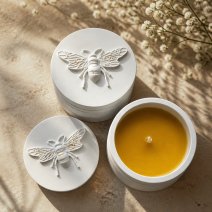
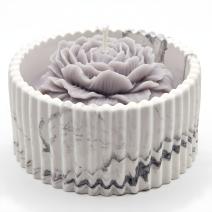
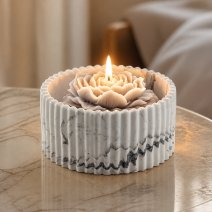
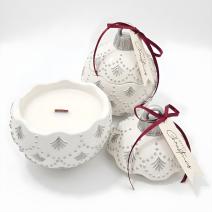
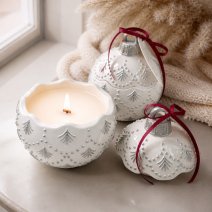
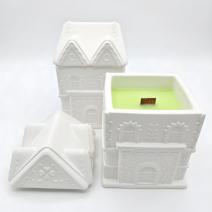
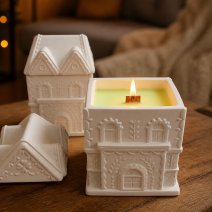
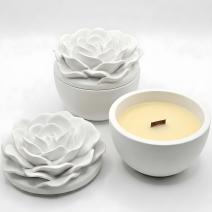
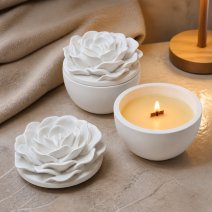
NOBAMO wax composition
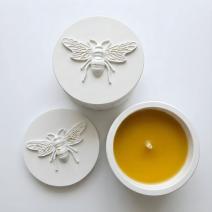
NOBAMO candles are manufactured in Slovakia. The specific composition is declared directly on the packaging and in the product documentation: coconut-apricot blend (contains a small proportion of mineral wax), coconut wax (for stability at higher temperatures and hot throw), and soy wax certified for use in candles. Depending on the candle, these waxes are used on their own or, in many pieces, blended together. No "trade secrets" in response to a customer's question about the composition.
The wick used in NOBAMO candles is made of wood or cotton, with no metal core. At the base it is held only by a metal wick tab, as is usual for candles. Fragrance oils are selected within the limits of IFRA standards and according to EU 2023/1545 limits for allergenic ingredients. Each candle is hand-poured by Mária Plačková, who personally guarantees the composition and quality of the specific product. Transparency is not a marketing claim; it is a standard part of the product documentation.
The goal of this model is to serve the consumer who wants to know exactly what they are buying and who is willing to pay a premium for ingredient transparency. This premium arises from the honest use of high-quality raw materials.
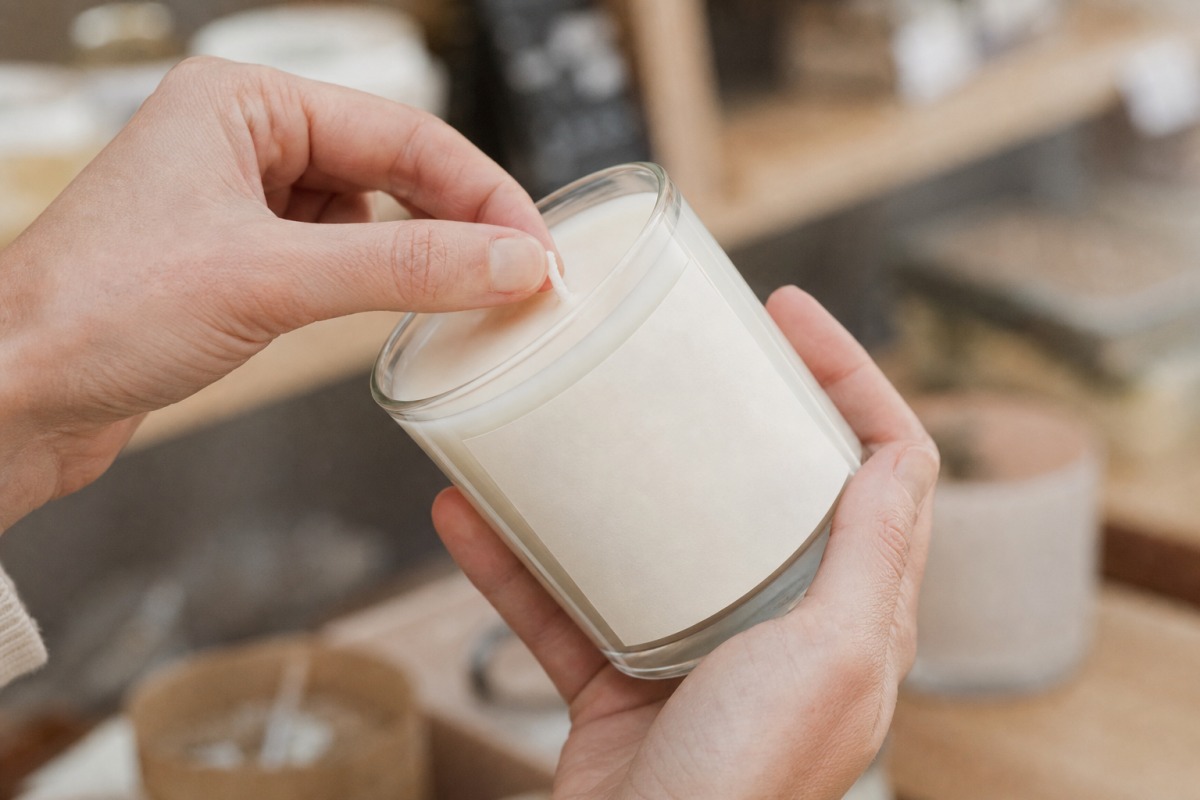
Conclusion: what you can do as a consumer
I will return to Eva, who prompted this article. After three thousand words of regulatory anatomy and detective work, I can give her the answer that was missing that March evening.
The candle Eva bought is highly likely a hybrid, because the price of €3.15 per 100 grams does not economically allow for 100% soy content. She doesn't have to throw the candle away; it is safe with reasonable use. However, if she is looking for a product that her children will breathe in while bathing, it is worth preferring a candle from the fourth-tier shelf or from direct sales by an artisan producer.
Three specific steps for your next candle purchase:
Step one: read the label literally. The label "soy candle" indicates the product contains soy wax in an unspecified proportion. The label "100% vegetable wax: soy X%, coconut Y%, rapeseed Z%" is a manufacturer's commitment to transparency. The difference is significant, and regulation does not mandate it.
Step two: check the price per hundred grams. A 200-gram candle for €9 means €4.50 per 100 grams. At this price, it is likely to contain a significant proportion of paraffin, because pure soy is not profitable at this price in commercial production. A 200-gram candle for €18 means €9 per 100 grams, which is the range in which a 100% vegetable candle can realistically be sold.
Step three: trust specific data, not marketing words. Certification with an audit number, specific percentage composition, a transparently stated wick and type of fragrance oil – these data carry weight. Words like "eco," "natural," "pure," "green" without a certificate number have zero regulatory weight. The label "eco" without data has no content.
European regulation leaves room for marketing, so the consumer must invest their own time to know what they are buying. It makes sense to support manufacturers who voluntarily declare their composition. The market changes through informed consumers and manufacturers who compete on transparency.
- EU CLP Regulation 1272/2008 on classification, labelling and packaging of chemical mixtures.
- Directive 2001/95/EC on general product safety.
- ASTM F2417 Standard Specification for Fire Safety for Candles.
- EU 2023/1545 Amending Cosmetics Regulation for fragrance allergen labelling (80+ named substances above 0.01%).
- IFRA International Fragrance Association standards for fragrance oils in candles.
- EcoLabel EU official EU ecological label.
- NFPA Home Candle Fires Report.
- CPSC 2018-2020 Residential Fire Loss Estimates.
- National Candle Association illuminating the truth.
- Petry et al. 2014 Regulatory Toxicology and Pharmacology 69(1):55-70.
- Beyond Aromatherapy 2023 Environmental Science and Technology.
- Nature Scientific Reports 2025 indoor air quality and candle emissions.
- ScienceDirect 2023, Combustion and Flame wick/wax burn rate study.
- ECA refutation 2018 South Carolina State University study response.
- Directive 2005/29/EC on unfair commercial practices (Unfair Commercial Practices Directive).
- USDA Organic certification of agricultural products.
- RSPO Roundtable on Sustainable Palm Oil.

Mother of two daughters, wife of Roman and the heart of our creative studio. Besides writing blogs, she dedicates herself daily to the handmade production of candles and decorative containers — she knows the materials, knows what lasts and what simply delights the home. She looks at jewelry, watches and fashion accessories from real family practice: what serves, what endures and what truly brings joy.
All articles by author
 Pillar Candles
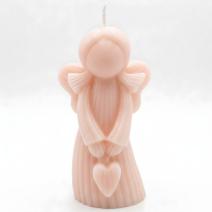
Angel Candle - Pink/Coconut
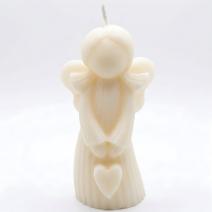
Angel Candle - White/Coconut


Capybara Candle with Backpack - Brown / Vanilla

Candle Forever - Pink / Coconut
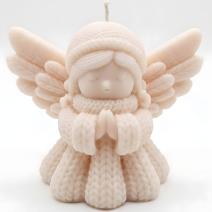
Candle Warm Guardian - Pink / Coconut
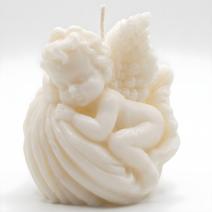
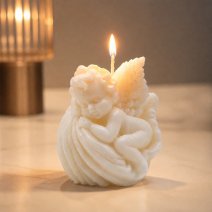
Cherub Candle - White / Coconut
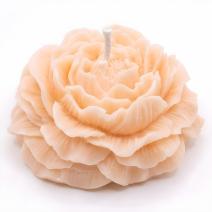
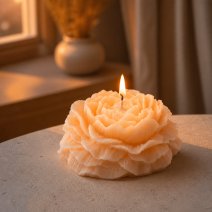
Peony Candle - Orange / Pink / Cherry


Forever Candle - White / Coconut
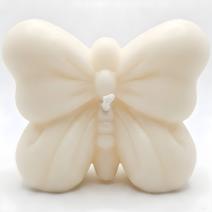
Candle Bow Butterfly - White / Vanilla



Comments
Add comment
Login required
To add a comment, you must log in to your account.
Don't have an account? Register